
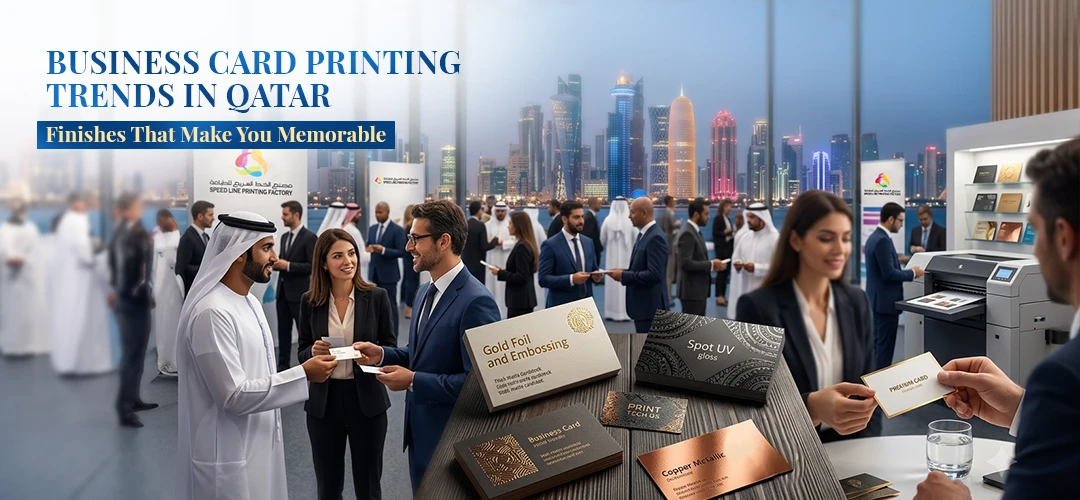
Everyone can share contact details with a tap these days, and business cards are still handed out constantly across Doha’s meetings, exhibitions, and networking events. That’s not a contradiction — a physical card is doing a different job than a digital contact save. It’s the thing someone sets down on the table during a meeting, glances at again after, and, if it’s done well, remembers you by. Business card printing in Qatar has moved on from the plain single-sided card of a decade ago, and the finishes below are what’s actually setting cards apart in 2026.
Why the Physical Card Still Earns Its Place
A card handed over in person carries weight a digital contact exchange doesn’t — it’s tactile, it sits on a desk, and it signals that you took the meeting seriously enough to bring one. In a business culture built heavily on in-person introductions and relationship-first dealmaking, that small physical gesture still does real work.
Soft-Touch (Matte) Lamination
This remains the most requested finish, and for good reason — it feels almost velvety to the touch, resists fingerprints far better than gloss, and gives colours and text a muted, upscale look rather than a shiny one. It’s become close to a default choice for professional services, consultancies, and corporate roles where understated is the goal.
Spot UV on Matte Stock
Pairing a matte laminated base with a raised gloss highlight over the logo or name creates contrast without shouting — the card reads clean until the light catches the raised element. This combination has become one of the more popular premium options because it adds visual interest without needing bold colour or heavy ink coverage.
Foil Stamping
Metallic gold, silver, or rose-gold foil on the company name or logo remains a strong choice for real estate, finance, and luxury retail — industries where a card is expected to signal a certain price point before a word is exchanged. Foil pairs particularly well with darker card stock, where the metallic contrast reads more clearly than it would on white.
Deboss and Letterpress-Style Texture
Pressing the logo or name into the card itself, rather than adding ink or foil on top, has grown more popular among design-conscious brands and creative agencies. It’s a quieter, more tactile way to stand out and tends to read as more considered than a heavily printed card.
Thicker Stock and Edge Painting
Cards at 500gsm and above feel noticeably more substantial in hand than the standard weight most people are used to, and that weight alone makes a card memorable before anyone even reads it. Coloured or painted edges — a thin strip of colour along the card’s border — have become a popular add-on for brands wanting a distinctive detail that shows even when the card is stacked in a holder.
QR Codes, Done Sparingly
QR codes linking to a digital business card, portfolio, or booking page are increasingly common, but the trend that’s actually working is restraint — a small, well-placed code in a corner rather than one dominating the layout. The card’s job is still to look good in the hand; the QR code is a bridge to digital, not the headline feature.
Choosing What Fits Your Industry
Professional services and corporate roles tend to favour understated matte finishes and clean typography. Creative agencies and design-led businesses lean into texture, unusual stock colours, and letterpress-style effects. Real estate, luxury retail, and hospitality often reach for foil and heavier stock, since the card is partly a proxy for the brand’s price point. If you’re unsure which direction suits your industry, our business card design guide breaks down the fundamentals in more depth.
Does a Premium Finish Cost Much More?
Soft-touch lamination and spot UV add a modest amount over a standard gloss or uncoated card, generally a worthwhile trade for how much they affect first impressions. Foil stamping and edge painting add more, since both require additional production steps and setup. As with most print products, cost per card drops as quantity increases, so it’s worth ordering a batch that will realistically last a year rather than reprinting every few months.
Frequently Asked Questions
What’s the most popular business card finish in Qatar right now?
Soft-touch matte lamination remains the most requested finish, often paired with spot UV on the logo for a subtle premium detail.
Is thicker card stock worth the extra cost?
For most professional and executive cards, yes — the weight is one of the first things people notice, and it reads as quality before the design is even considered.
Should I include a QR code on my business card?
It’s a useful addition if kept small and secondary to the card’s core design — a large or dominant QR code tends to undercut the card’s physical impression rather than add to it.
How many business cards should I order at once?
Order enough to comfortably last through your expected networking activity for the next year — reprinting small batches repeatedly usually costs more per card than one larger order.
Order Your Next Batch
Whether you’re after understated matte, foil-stamped elegance, or a heavier premium stock, get in touch with Speedline with your design and quantity and we’ll recommend the finish that fits your industry and budget.